Current-state mapping
Standard features, extensions, CMS, payments, identity and operational constraints.
Intershop PWA migration
Keep the B2C/B2B journeys that matter, then progressively replace the historical Angular stack with the implementation that fits your teams.
You keep
You modernise
Intershop Ready
The target is not a cosmetic rewrite. Each functional domain is compared, rebuilt and validated before cutover.
Standard features, extensions, CMS, payments, identity and operational constraints.
Journey prioritisation, possible coexistence and reduced cutover risk.
Modern server rendering, BFF, simpler state and current dependencies.
Parity, performance, SEO and accessibility measured in your context.
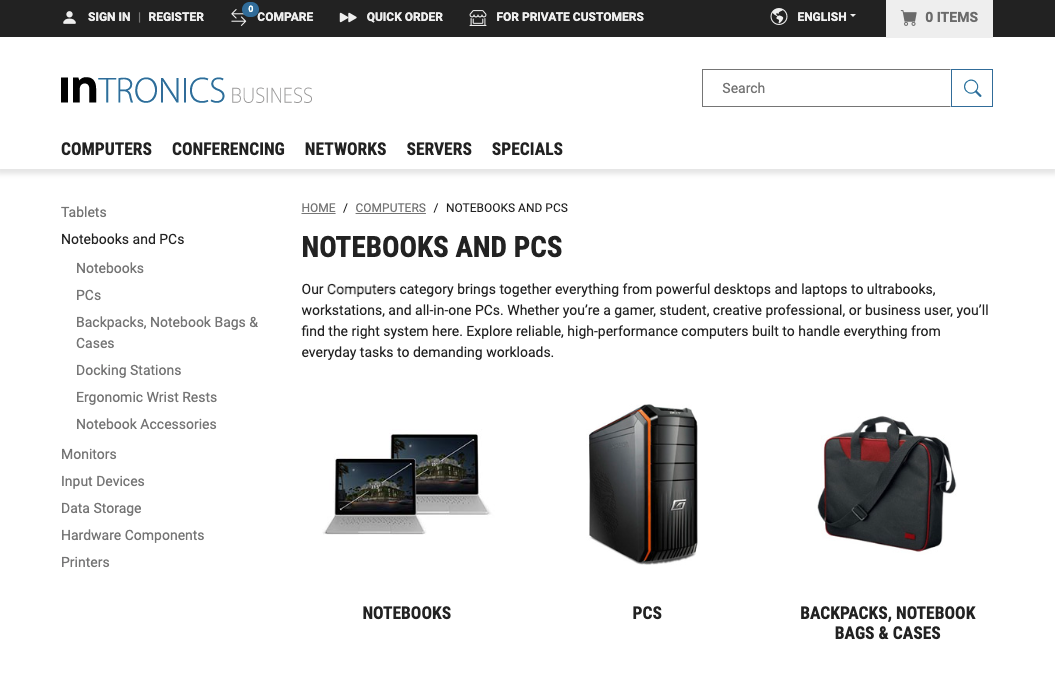
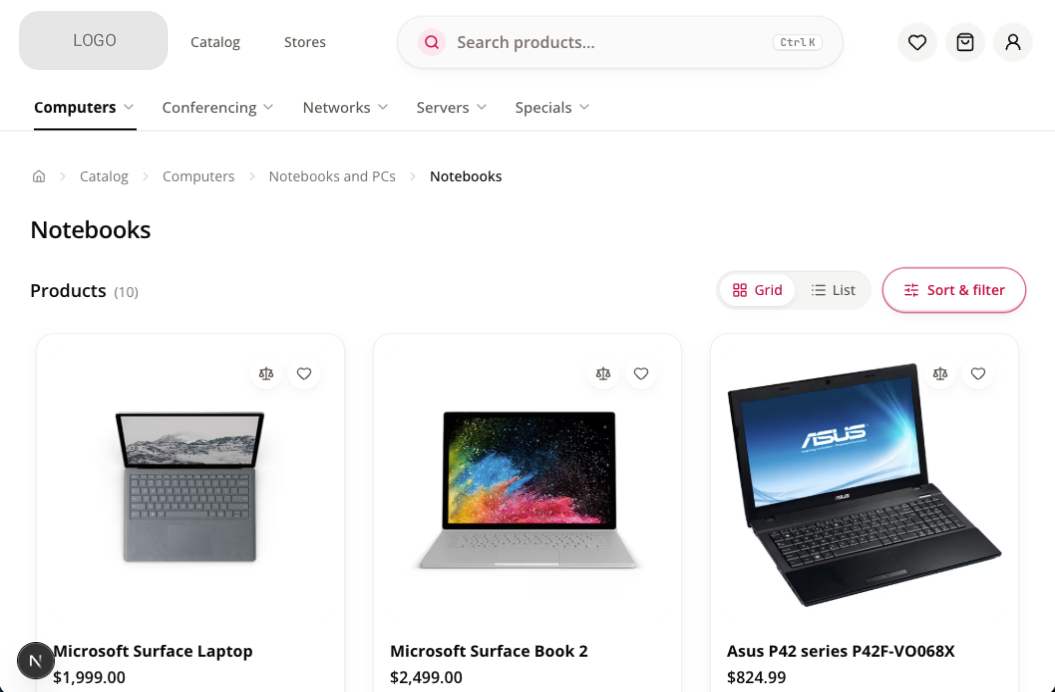
Before / After
Differentiation
The migration should not only reproduce the existing stack. It should also give you the structural capabilities already built into IntershopReady.
SEO, structured data, accessibility
IntershopReady
A foundation designed from the start for current web requirements.
Intershop PWA
Possible improvements, but not built in as the starting point.
Modern SSR
IntershopReady
Current server rendering and an architecture built for SEO and performance.
Intershop PWA
A legacy stack less aligned with current web standards.
Offline experience & PWA
IntershopReady
Visited pages cached by a versioned service worker, a multilingual offline shell and an install prompt, with caches scoped per locale and per user.
Intershop PWA
A more limited legacy service worker, without per-user offline caching or an equivalent multilingual shell.
Google Merchant Center
IntershopReady
Product feed structure, SEO foundations and pages ready to power Google Shopping channels.
Intershop PWA
No dedicated foundation and more work to assemble around the project.
Agentic commerce (MCP, UCP)
IntershopReady
A surface dedicated to AI agents: a read-only MCP server (/api/mcp), llms.txt and agent-skills discovery to explore the catalogue, plus a REST agentic-checkout surface (/api/ucp) aligned with Google's Universal Commerce Protocol, creating real baskets and orders.
Intershop PWA
No agentic-commerce support or interface dedicated to shopping agents.
BFF and ICM integration
IntershopReady
A clear integration layer between the browser and Intershop Commerce Management.
Intershop PWA
A more monolithic and less readable integration model.
Three aligned implementations
IntershopReady
Next.js, Nuxt and Angular SSR keep the same functional coverage.
Intershop PWA
A single inherited base to maintain and extend.
FAQ
Migrating to IntershopReady brings a modern server-first architecture, a more refined user experience, better performance and stronger SEO and accessibility, without rebuilding your business logic.
Yes. You keep your B2C/B2B logic, your proven shopping journeys and Intershop Commerce Management. You only modernise the storefront layer.
For Angular teams, the IntershopReady Angular SSR implementation is the most natural continuity path, without staying trapped in the old PWA. Next.js and Nuxt are also available.
ICM stays in place as the back office; the new storefront connects to its APIs through the BFF. You replace the frontend layer progressively, reusing your existing functional scope.